At a live event there is no second chance. Doors open at a fixed time, tens of thousands of people arrive within a couple of hours, and every system, from ticketing and turnstiles to cameras, radios and building controls, has to work together under pressure.
We have delivered and run technology operations at this scale, including a world-scale football tournament across eight stadiums, with a command centre connecting eight venues and more than 60 ICT services behind one escalation point. These are the practices that held up every time, and most of them apply to any large venue or recurring event.
Readiness is a project of its own
The most valuable work happens before the first gate opens. Design reviews and acceptance tests show that each system works on its own. Readiness exercises show whether the whole operation works together, with real people, on real systems, under time pressure.
We run exercises across every venue in increasing order of difficulty. Tabletop sessions walk through scenarios with team leads around a table. Technical rehearsals then exercise the actual systems: a turnstile bank goes offline, a camera network segment drops, the ticketing platform slows at peak entry, a power feed fails. Full rehearsals finally combine several faults at once, with operators, vendors and venue managers all playing their real roles.
Each exercise finds gaps that no document review would: a phone number that goes to voicemail, a fallback procedure nobody has printed, two teams who each think the other owns a decision. We record every gap, assign an owner and close it before the next exercise.
One escalation point and major-incident management
Large events involve many services and many suppliers. If each has its own help desk, staff at a venue do not know whom to call, and incidents bounce between teams. We set up one escalation point for all technology services. Anyone at any venue reports an issue once, and the service desk logs, prioritises and routes it.
Behind that single point sits a clear major-incident process, based on established service management practice such as ITIL. Priorities are defined in advance by impact on safety, entry and the event itself, not by who shouts loudest. A major incident has a named incident manager, a single bridge call, fixed update intervals and an agreed route to the event's own safety and operations leadership.
Live events reward preparation more than features.
What the command centre watches
- Safety and security: camera feeds, alarms, intrusion detection and the status of public address and emergency systems.
- Facilities: power, cooling, lifts, lighting and the building management systems that keep a venue running.
- Access: turnstiles, ticket validation, accreditation and vehicle entry, with live counts by gate.
- Crowd: occupancy by zone, queue lengths, flow between areas and transport arrivals, so that pressure points are seen before they form.
A command centre is where the separate systems of a venue become one picture. Without it, each team watches its own screen and incidents are noticed several times by different people, or not at all. With it, an event is seen once, by the right people, with a standard procedure attached.
The command centre typically brings together four groups of information:
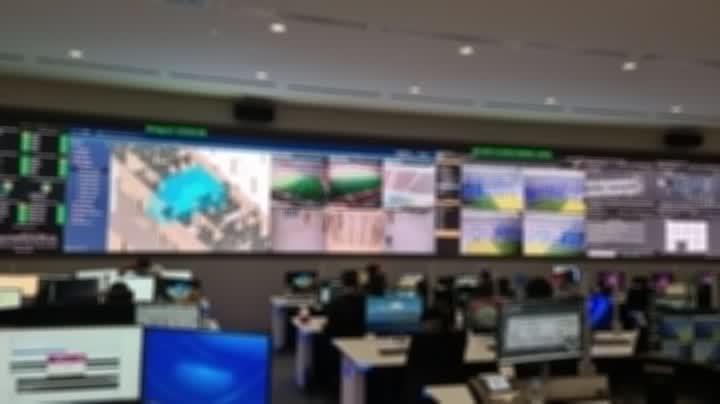
The layout of the room matters as much as the software. Operators for each domain sit together, the incident manager has a clear view of the main wall, and liaison seats are reserved for venue operations, security and key suppliers.
Runbooks and standard procedures
Every foreseeable incident should have a runbook: a short, tested procedure that says who does what, in what order, and when to escalate. Good runbooks are one or two pages, written in plain language, and stored where operators can reach them in seconds. They cover both the technical fix and the operational response, for example opening manual entry lanes while a turnstile bank is restored.
Runbooks are written early, tested during readiness exercises and updated after every rehearsal and event. A runbook that has never been used in an exercise should be treated as a draft. We also keep manual fallbacks for anything that lets people in or out of a venue, because no system is available all the time.
Vendor coordination
Large venue programmes involve dozens of suppliers: network, ticketing, cameras, audio visual, broadcast, catering systems and more. The difference between a smooth event and a difficult one is often whether they work as one team.
In practice that means a shared operating plan, a shared contact list with named people for each event day, a shared incident channel and the same priority definitions for everyone. Suppliers take part in readiness exercises and post-event reviews, and their key staff sit in or near the command centre on event days. Contracts should set response times that match the event, not business hours.
The event-day rhythm
Event days follow a fixed rhythm. Writing it down, and keeping to it, removes a great deal of stress.
- Before: system checks and go or no-goHours before doors open, every critical system is checked against a list, and each owner confirms readiness. A short briefing covers the day's risks, weather, expected crowd and any open issues.
- Doors open: peak entryThe command centre watches gate counts, ticket validation rates and queues closely. This is the hour that systems and networks must be sized for.
- During: steady operationsRegular status updates at fixed times, incidents handled through the single escalation point and the major-incident process if needed.
- Egress and closeCrowd flow and transport are the focus as people leave. Systems are returned to normal operating mode and any temporary changes are reversed.
- After: hot debrief and post-event reportA short debrief the same day captures what happened while it is fresh. A written post-event report follows, with incidents, response times, root causes and actions, each with an owner and a date for the next event.
Data and digital twins
Every event produces useful data: entries per gate per minute, queue times, incidents by type and location, response and resolution times. Collected in one place, it makes the next event better. Left in separate systems, it is lost by the next morning.
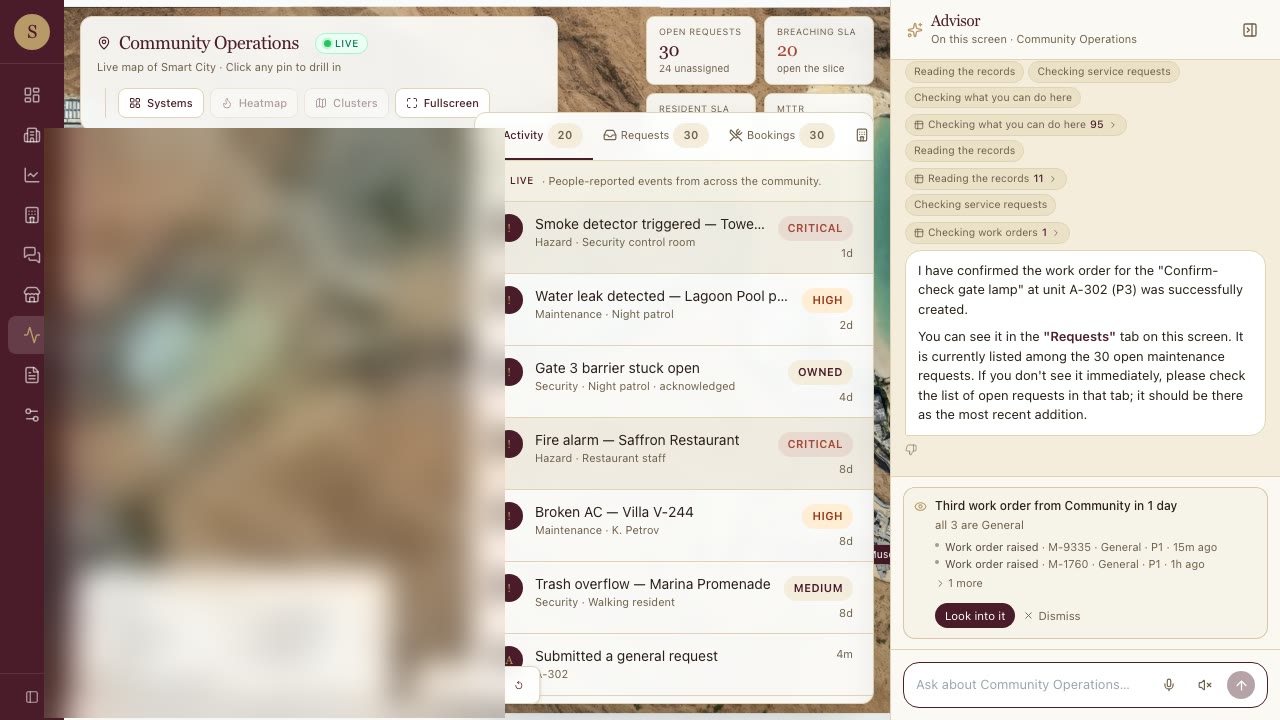
A digital twin of a venue, meaning a live model that combines the building layout with system data, takes this further. Operators can see where an alarm sits in the building, how a crowd is moving between zones and which systems are affected by a fault. Between events, it helps test a new gate layout or entry plan before trying it with real people.
Lessons that transfer to any large venue
- Size networks and systems for the busiest hour, not the average day.
- Give every critical service one owner and one escalation path.
- Run readiness exercises before every major event, not only the first one.
- Keep manual fallbacks for entry, exit and safety, and rehearse them.
- Treat suppliers as part of the operating team, with shared plans and reviews.
- Write a post-event report every time, and check the actions before the next event.
You do not need a world tournament to benefit from these practices. Stadiums, arenas, exhibition centres, campuses and recurring festivals all face the same questions on a smaller scale.
Frequently asked questions
Do we need a permanent command centre?
Not always. Many venues run a temporary or shared command room on event days and a smaller operations desk at other times. What matters is one picture, clear roles and tested procedures.
How early should readiness exercises start?
As soon as the main systems are installed and accepted. For a large programme that usually means a series of exercises over several months, with the full rehearsal close to the first event.
What is the most common failure on event day?
In our experience it is rarely a single technical fault. It is unclear ownership: a problem that nobody is sure is theirs, or an escalation route that has never been tested.
Where is AI starting to help?
Counting and directing crowds from camera feeds, predicting queues before they form, routing incidents to the right team and answering staff questions in real time. It works best on top of the foundations described here, not instead of them.
Live events reward preparation more than features. One picture, one escalation point and well-rehearsed people will carry an event through a bad hour.